
De Quervain's Tendinitis: When Thumb Pain Becomes Unbearable
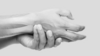
De Quervain's tenosynovitis is an inflammation of the tendons that pass through the first dorsal compartment of the wrist. It affects the long abductor of the thumb (APL) and the short extensor of the thumb (EPB). It occurs when these tendons are compressed within their sheaths, causing pain and functional impairment.
Who does this happen to?
-
New mothers, due to the repetitive motions involved in carrying their babies.
-
Manual laborers: hairdressers, painters, gardeners.
-
Heavy users of smartphones or laptops.
-
Sports: tennis, rock climbing, weight training.
Characteristic symptoms
-
Pain along the outer edge of the wrist (thumb side).
-
Pain that worsens with grasping, rotating, or carrying a load.
-
Positive Finkelstein test: sharp pain when the thumb is flexed into the palm and the wrist is tilted inward.
-
A sensation of friction or a jolt.
-
Localized swelling or warmth to the touch in acute cases.
Diagnosis and Tests
The diagnosis is primarily clinical. Ultrasound can help visualize inflammation of the tendons and can sometimes be used to precisely guide a therapeutic injection.
What treatments are available?
-
Conservative measures:
-
Rest and temporary cessation of trigger activities.
-
Wearing a Quervain's brace that immobilizes the thumb and wrist.
-
Apply ice and take anti-inflammatory medication.
-
-
Infiltration:
-
Ultrasound-guided corticosteroid injections are often very effective, usually requiring only one or two sessions.
-
It helps reduce inflammation and quickly relieve pain.
-
-
Adapted physical therapy:
-
Deep Transverse Massage Techniques.
-
Progressive stretching.
-
Strengthening the thumb extensor muscles.
-
-
Surgery:
-
If medical treatment fails after several months.
-
A quick, outpatient procedure to release the tendons from their sheaths.
-
Excellent success rate, with complete functional recovery in the majority of cases.
-
Preventing Recurrence
The key is to modify high-risk movements: carry your child differently, avoid repetitive twisting motions, and gradually strengthen the tendons after recovery. Support from a physical therapist or occupational therapist is recommended during the recovery phase.